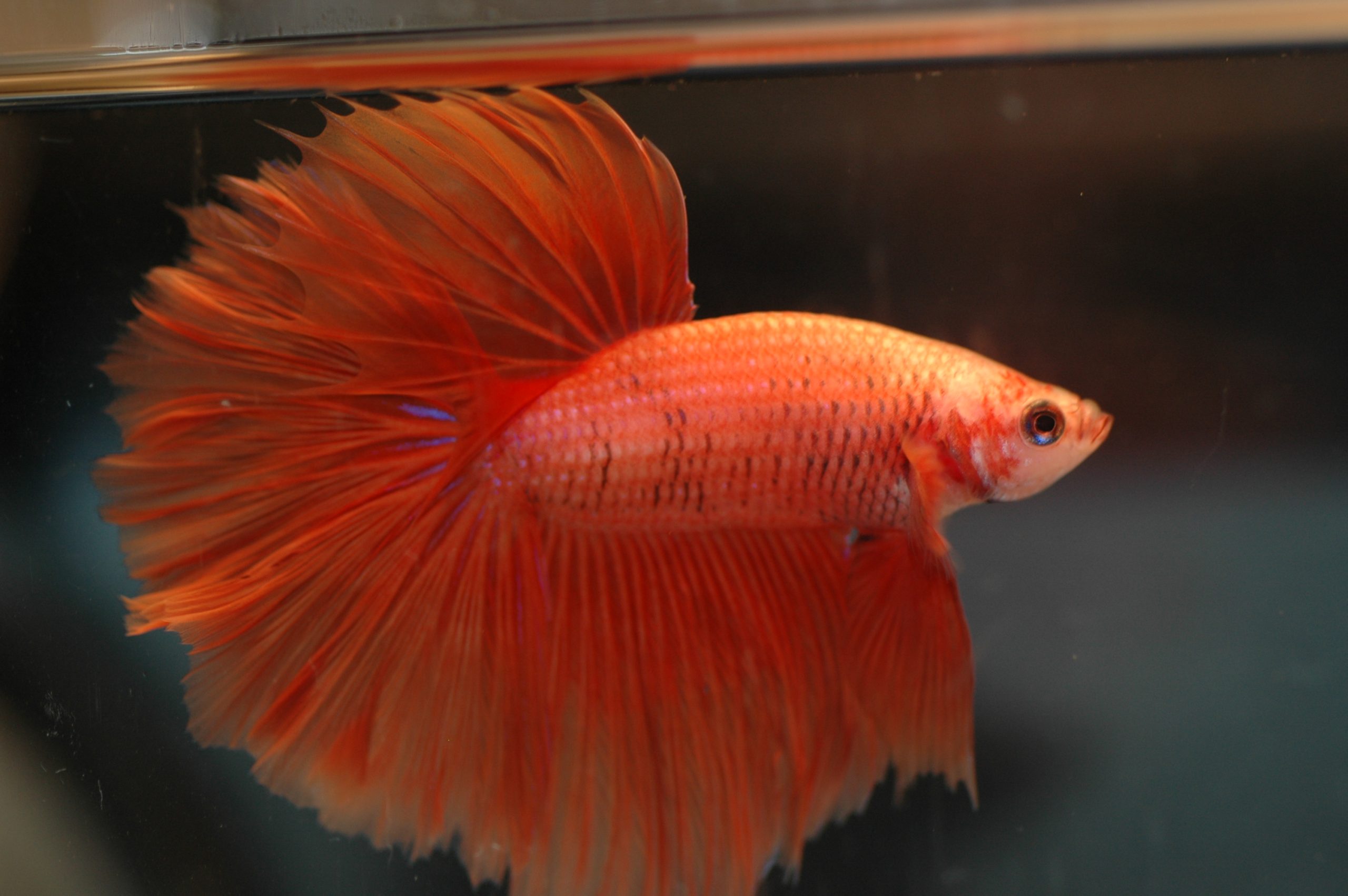
Betta splendens: What You Are Getting Into
Betta splendens, the Siamese fighting fish, packs iridescent scales and flowing fins into a compact body. Males grow to about 7 cm and live three to five years when you get the basics right. Their bold personalities make them one of the first purchases new aquarists reach for, and a well-set-up tank keeps them thriving for years. This guide walks through the essentials: tank size, water quality, filtration, setup, feeding, tank mates, common health problems, enrichment, and breeding.
Tank Size
A minimum of 20 litres works for a single male, but 30 litres is the sweet spot. Smaller setups swing in temperature and ammonia levels fast, which stresses the fish and invites disease. A 30 litre tank holds water parameters steady, gives your betta room to swim, and makes maintenance easier on your end. A standard rectangular shape also provides more surface area for gas exchange than a tall, narrow vase or bowl.
Water Parameters
Keep water at 24 to 27 degrees Celsius, stable across the week. Sudden swings of more than two degrees in a day can shock the fish. Aim for pH 6.5 to 7.5, ammonia and nitrite at 0 ppm, nitrate below 20 ppm, and general hardness between 5 and 20 dGH. Test weekly with a liquid test kit, not paper strips, which give inconsistent readings. Partial water changes of 20 to 30 percent each week keep nitrates low and the fish active.
Filtration
Bettas come from slow-moving rice paddies in Southeast Asia, so they do not tolerate strong current. A sponge filter handles biological filtration without pushing water too hard, and it gives beneficial bacteria a large surface area to colonise. If you use a hang-on-back filter, baffle the outflow with a sponge or filter sponge pad. Strong current tears fins, stresses the fish, and makes it harder for them to reach the surface for air.
Tank Setup
Dense planting mimics their natural habitat and cuts aggression by breaking sightlines across the tank. Good choices include Java Fern, which attaches to driftwood and grows slowly, Anubias, which tolerates low light and resists nibbling, Frogbit as a floating plant with long roots, Cryptocoryne for the midground, and Java Moss for carpeting surfaces. Add driftwood or smooth stones for hiding spots, and leave an open channel at the front for swimming. Floating plants like Frogbit give your betta a place to rest near the surface, where they spend most of their time. A dark substrate brings out the colour in their scales and encourages natural foraging behaviour. Avoid sharp decorations, which tear delicate fins.
Feeding
Bettas are insectivorous. Their wild diet centres on insects and larvae, so protein content matters more than variety. Choose pellets with over 40 percent protein and low fillers like wheat or soy. Feed 2 to 3 pellets twice daily, and skip one day each week to let their digestive system clear. Supplement with frozen or live foods like bloodworms, daphnia, or brine shrimp two to three times per week. Their stomach is roughly the size of their eye. Overfeeding causes bloating, constipation, and fouls the water faster than anything else. If the fish looks bloated after a meal, you fed too much.
Tank Mates
Male bettas are territorial and will attack fish that resemble other males. Safe companions include peaceful rasboras like harlequin or chili rasboras, pygmy corydoras, otocinclus, amano shrimp, and snails like nerites or mysteries. Avoid other male bettas, guppies with flowing fins, barbs, and gouramis, which trigger the same aggressive response. Add the betta last to the tank so it cannot claim territory before the others settle in. Monitor behaviour for the first week and have a backup plan if aggression flares. A planted tank with hiding spots gives both the betta and the tank mates space to coexist.
Common Health Issues
Fin rot shows up as ragged or discoloured fin edges, usually from poor water quality or bacterial infection. Improve water quality first with partial water changes every other day, and add Indian Almond Leaves, which release tannins that suppress bacteria and lower pH slightly. Mild cases clear up within a week once water quality improves.
White spot disease, known as Ich, looks like salt grains on the body and fins. Raise the tank temperature to 30 degrees Celsius over 24 hours and treat with aquarium salt at 1 tablespoon per 5 litres. Remove any carbon filtration during treatment, as it absorbs the medication. Repeat the salt dose every 48 hours for two weeks to kill the parasite at every life stage.
Swim bladder disorder causes the fish to float sideways or sink to the bottom. Overfeeding is the most common cause. Fast for 2 to 3 days, then feed a blanched, deshelled pea to clear the blockage. If the problem persists after two rounds of fasting, it may indicate a bacterial infection that needs antibiotic treatment.
Velvet produces a fine, gold-rusted dust on the skin under bright light. The fish rubs against objects and clamps its fins close to the body. Dim the lights and treat with a copper-based medication, following the dosage on the label exactly. Velvet spreads fast through a tank and its free-swimming stage lives in the water, so treat the tank rather than moving the fish out — isolate for comfort, not as a treatment. Remove activated carbon first, because it strips the medicine back out of the water. Copper kills snails and shrimp, so move any inverts out before dosing.
Behaviour and Enrichment
Bettas are more intelligent than most people expect. They recognise their owners and respond to movement outside the tank. They flare at reflections, so limit mirror sessions to a few minutes to avoid exhaustion. Rearrange hardscape every couple of weeks to give them new territory to explore. Live food hunts, simple trick training with a floating ring, and varied feeding schedules keep a betta mentally active. A bored betta becomes lethargic, stops eating, and loses colour over time. Even small changes like moving a plant or adding a new hiding spot give them something to investigate.
Breeding
The male builds a bubble nest at the surface when conditions suit him, using saliva to bind bubbles together. Introduce a female in a transparent container so he can display without physical contact. When she shows vertical bars on her body and a receptive posture, release her into the tank. After spawning, remove the female immediately. Males turn aggressive during guarding and may injure or kill her. The male guards the eggs and fry for several days, repairing the nest and retrieving any fallen fry. Feed fry infusoria or microworms for the first week, then move to baby brine shrimp as they grow. Use separate grow-out tanks to prevent overcrowding and maintain clean water as they develop.
Sacred Aquatics
Stocking bettas, tanks, filters, live plants, and everything you need for a healthy setup at our Cape Town shop. Visit us to pick up supplies or ask questions about your aquarium.